

Analysis Examines US-China AI Competition and Implications for International Security Architecture
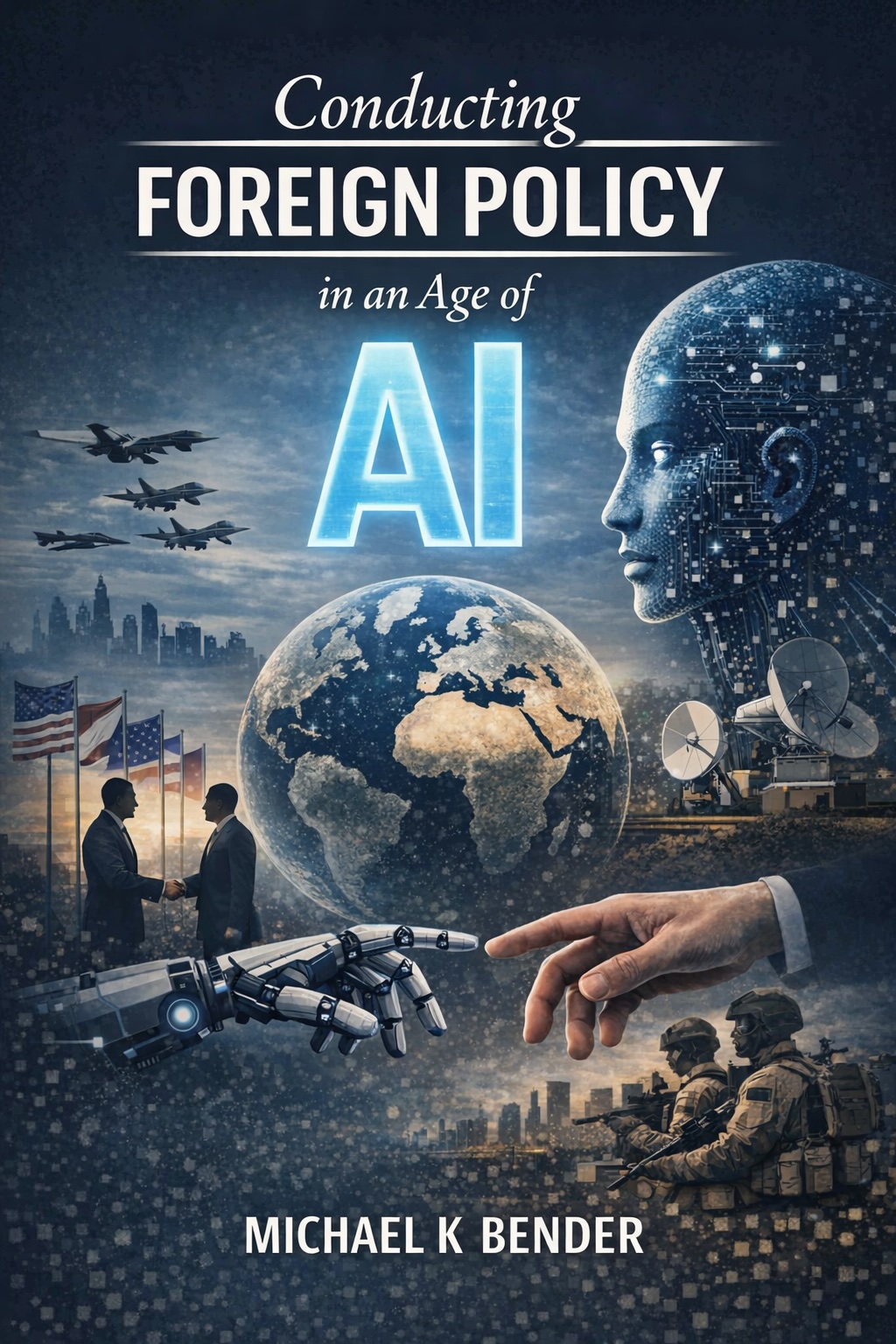
Conducting Foreign Policy in an Age of AI
New Publication Addresses Technology Race, Semiconductor Supply Chains, and Governance Frameworks as Nations Integrate AI into Diplomatic Operations
The decisions being made now about how to develop, deploy, and govern artificial intelligence will reverberate across the international system for years to come.”
CAIRO, NY, UNITED STATES, March 26, 2026 /EINPresswire.com/ -- As governments worldwide accelerate artificial intelligence deployment in foreign policy institutions, "Conducting Foreign Policy in an Age of AI" by Michael K. Bender provides analysis of the strategic competition reshaping international relations. The work examines how AI integration affects diplomatic practice, military operations, and global governance structures.— Michael K Bender
The publication arrives as the United States and China intensify competition across AI development dimensions—from semiconductor manufacturing and computational infrastructure to talent acquisition and regulatory frameworks. According to the analysis, decisions regarding AI governance and deployment will influence international system dynamics across multiple domains.
Strategic Competition Dynamics
"Conducting Foreign Policy in an Age of AI" documents how AI capabilities are being integrated into intelligence analysis, military command systems, and diplomatic communications. Chapter 3 examines the U.S. military's Joint All-Domain Command and Control (JADC2) initiative, designed to integrate AI across combat domains. The analysis addresses China's "intelligentized warfare" concept and Russia's deployment of AI-enabled disinformation operations.
The semiconductor supply chain emerges as a critical competition dimension. The text examines how advanced chip manufacturing—concentrated in Taiwan, South Korea, and specific facilities in the United States—creates strategic dependencies. Export controls, investment restrictions, and technology transfer policies represent tools nations employ to maintain competitive advantages.
Talent acquisition constitutes another competition front. The analysis documents how nations compete for AI researchers, engineers, and technical specialists through immigration policies, research funding, and academic partnerships. Universities function as sites where technology development, international collaboration, and national security concerns intersect.
Institutional Adaptation Requirements
"Conducting Foreign Policy in an Age of AI" addresses how foreign ministries, intelligence agencies, and defense departments must adapt organizational structures to integrate AI capabilities. Chapter 7 presents policy recommendations for developing technical expertise within diplomatic institutions, establishing oversight mechanisms, and creating evaluation frameworks for AI system deployment.
The analysis identifies institutional capacity gaps. Many foreign policy organizations lack personnel with combined expertise in AI systems and diplomatic practice. The work recommends establishing AI advisory units, developing training programs, and creating channels for technical-policy collaboration.
Governance Framework Challenges
"Conducting Foreign Policy in an Age of AI" examines divergent regulatory approaches across jurisdictions. The European Union's General Data Protection Regulation (GDPR) and proposed AI Act prioritize rights protection and risk mitigation. The United States emphasizes market-driven innovation with sector-specific regulations. China's approach combines state-directed development with surveillance applications and social control mechanisms.
These regulatory differences create challenges for international cooperation. The analysis addresses how nations might develop shared norms regarding autonomous weapons systems, AI-enabled surveillance, and algorithmic accountability while maintaining different domestic frameworks.
Ethical and Legal Dimensions
"Conducting Foreign Policy in an Age of AI" examines autonomous weapons systems and international humanitarian law. The Campaign to Stop Killer Robots and similar initiatives advocate for maintaining human control over lethal force decisions. The analysis addresses technical challenges in ensuring meaningful human oversight of AI systems operating at machine speed. It documents AI deployment in authoritarian contexts, examining surveillance technologies, social credit systems, and predictive policing applications. The analysis addresses how these capabilities affect human rights, political dissent, and civil liberties.
Scenario Analysis
"Conducting Foreign Policy in an Age of AI" presents four future scenarios ranging from cooperative AI governance to fragmented competition. The scenarios examine how different policy choices might affect international stability, technological development trajectories, and governance effectiveness.
The analysis emphasizes that outcomes remain contingent on policy decisions. International institutions, national governments, technology companies, civil society organizations, and academic institutions all influence how AI capabilities develop and deploy.
Methodology and Sources
The work synthesizes technical literature, policy documents, case studies, and strategic analyses. The publication includes a glossary of technical terms, an annotated bibliography, and recommendations for further reading across technical, policy, and ethical dimensions.
About the Publication
"Conducting Foreign Policy in an Age of AI" addresses foreign service personnel, defense officials, policymakers, academic researchers, technology sector leaders, and informed general readers. The seven-chapter structure combines technical explanation, policy analysis, and strategic assessment. It provides frameworks for understanding AI's role in international relations and recommendations for governance approaches that balance innovation, security, and the protection of rights.
Michael K Bender
Mkbender.com
+1 518-704-1688
email us here
Visit us on social media:
LinkedIn
YouTube
Conducting Foreign Policy in An Age of Ai
Legal Disclaimer:
EIN Presswire provides this news content "as is" without warranty of any kind. We do not accept any responsibility or liability for the accuracy, content, images, videos, licenses, completeness, legality, or reliability of the information contained in this article. If you have any complaints or copyright issues related to this article, kindly contact the author above.
