

Queen Maria of Romania's Statue Inaugurated in Transylvania, in the Presence of HRH Prince Radu of Romania
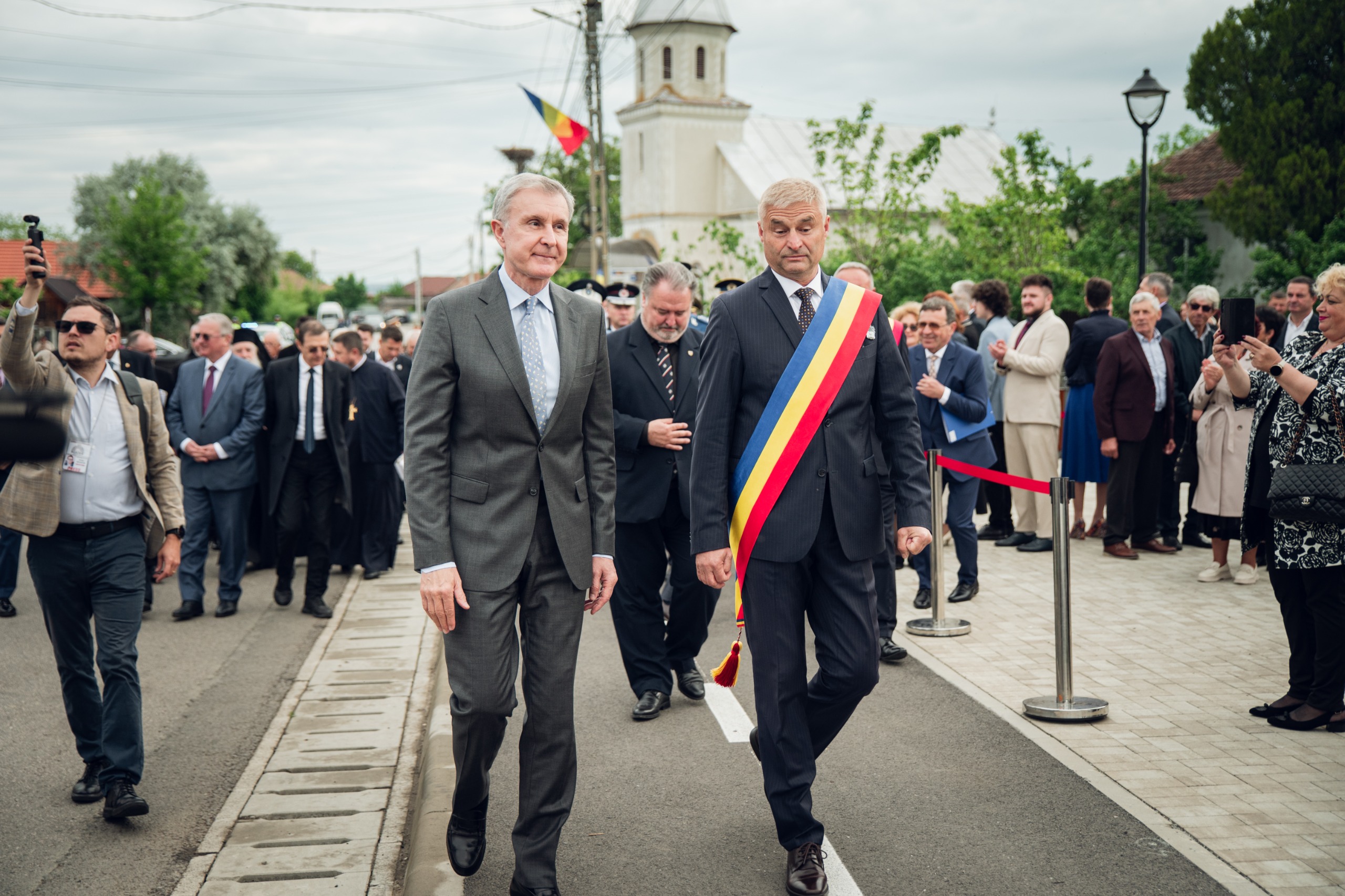
HRR and local authorities at statue unveiling
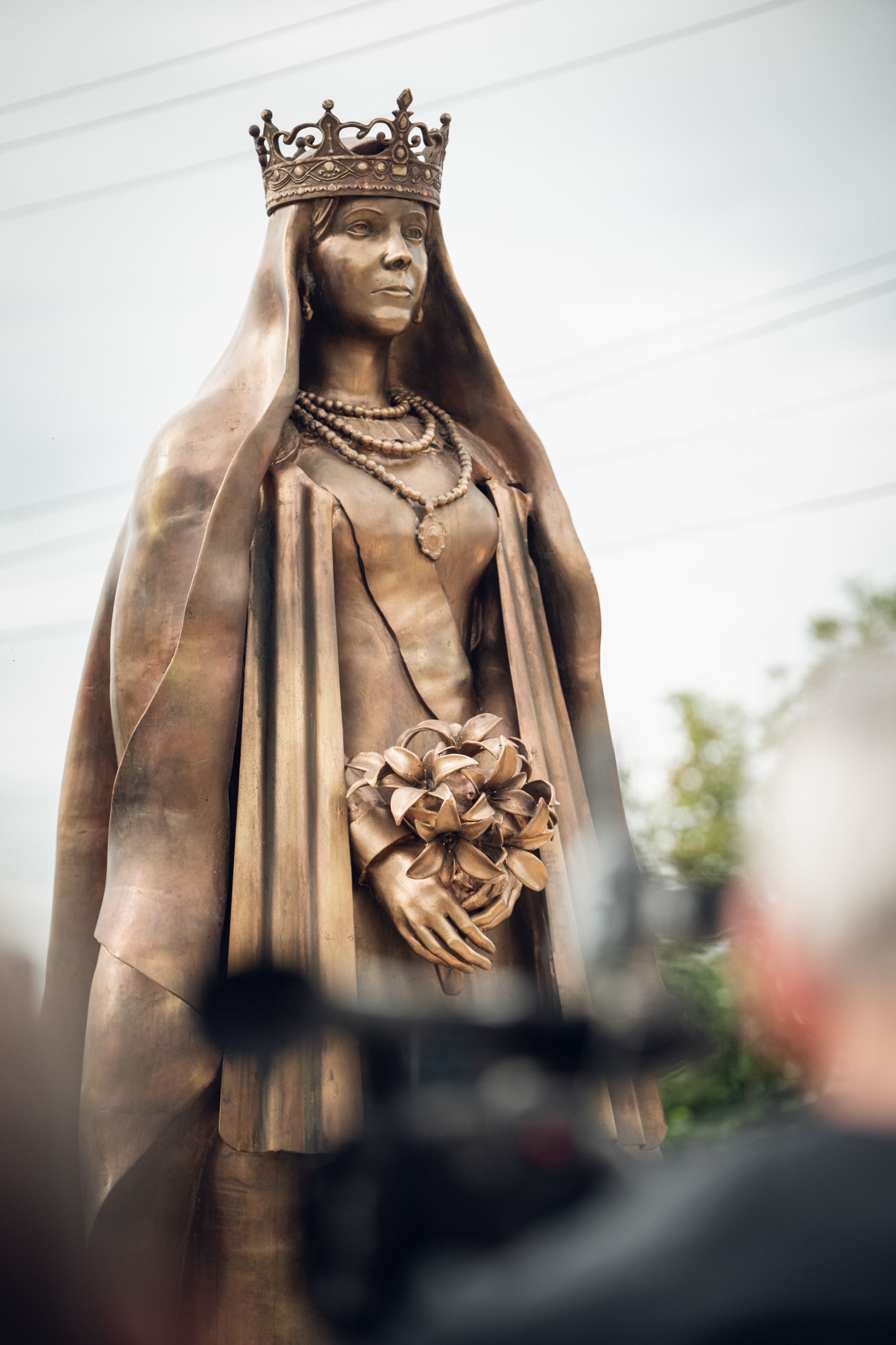
Statue of Queen Maria in Jucu
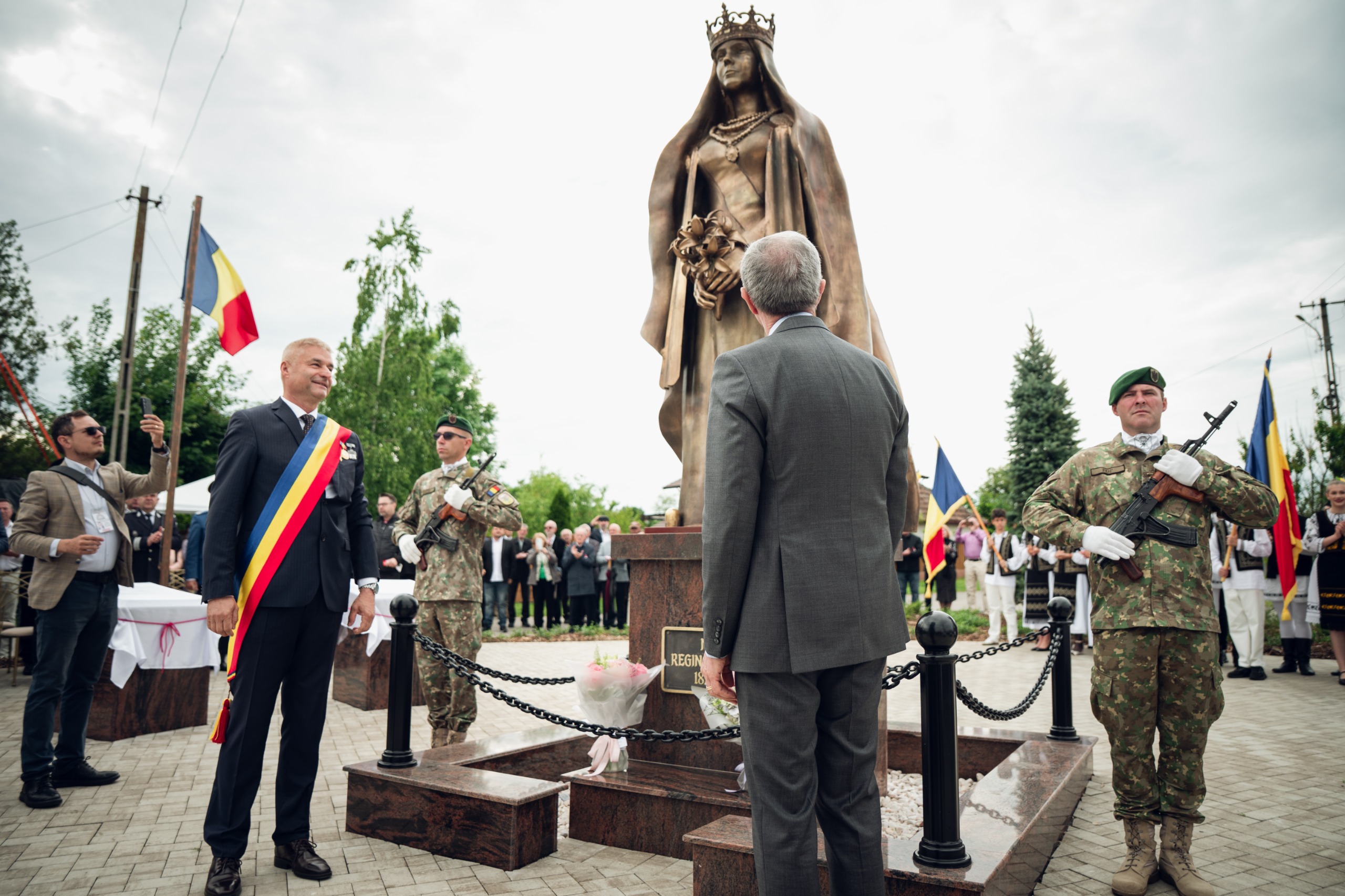
The unvailing
A small public square has been designed in the centre of Jucu, a Romanian village, featuring the statue of the Queen of the Great Union at its heart
JUCU, CLUJ, ROMANIA, June 5, 2026 /EINPresswire.com/ -- One of the most important historical figures in Romanian history, Queen Maria, is honoured in a distinct manner in the Cluj commune of Jucu. A small public square has been designed in the centre of the commune, featuring the statue of the Queen of the Great Union at its heart. The monument is surrounded by six plinths with panels detailing her life, as well as four walkways symbolising the history of the three Romanian principalities—Transylvania, Moldavia, and Wallachia—which were unified in 1918 to form the Kingdom of Romania. The square was developed under the initiative of Mayor Valentin Dorel Pojar, designed by Adrian Goga, and the statue was cast by master Liviu Plugărescu.The inauguration of Queen Maria's statue brought Romania's elite to Jucu, led by His Royal Highness Prince Radu of Romania; His Grace Samuel Cristea, Vicar Bishop of the Orthodox Archdiocese of Vad, Feleac, and Cluj; Ioan Aurel Pop, President Emeritus of the Romanian Academy for the period 2018–2026; the former Minister of European Affairs, historian Vasile Pușcaș; the Director of the 'George Barițiu' Institute of History of the Romanian Academy, Ioan Bolovan; the Director of the UBB CORE Centre, Leonard Horvath, lecturer at Babeș-Bolyai University; Flavius Milășan, Director of the Students' Culture House in Cluj; and Professor Stelian Tofană from the Faculty of Orthodox Theology.
Civil authorities were represented by prominent figures such as Vákár István, Vice-President of the Cluj County Council; members of the Romanian Parliament, including MPs Remus Lăpușan and Ramona Bruynseels; county councillors; and mayors of several localities along the Someșul Mic Valley. The military authorities were represented by General Bogdan Cernat, Commander of the 4th Infantry Division 'Gemina', and Colonel Sebastian Clițan from the Romanian Gendarmerie. Civil society was represented by personalities such as Valentin Lungu, Vice-President of the National Alliance for the Restoration of the Monarchy; Dan Dumitrana, founder of the Transylvanian Royal Choir; Marius Pop, Chairman of the Bistrița Monarchists' Club; Cornel Jurju, Chairman of the Cluj Monarchists' Club; Eugen Moț, President of the Cluj Art Association; and Ionuț Coman, member of the International Academy of Saint Mauritius. The music was performed by the military brass band and the 'Voci Transilvane' Choir, conducted by master Adrian Corojan. According to historian Vasile Pușcaș, a corresponding member of the Romanian Academy, Queen Maria was the most significant female figure in Romanian history.
Maria was born on 29 October 1875 at Eastwell Park in the county of Kent, England. Her father was Prince Alfred, Duke of Edinburgh, the son of Queen Victoria of Great Britain, whilst her mother was Grand Duchess Alexandra Feodorovna of Russia, daughter of the Russian Emperor, Alexander II. Maria was baptised into the Anglican faith in the private chapel of Windsor Castle. For her first twelve years, Maria of Edinburgh lived primarily at Eastwell Park, with occasional stays at the family's London residence, Clarence House. Then, in 1886, her father was appointed Commander-in-Chief of the British Mediterranean Fleet. Consequently, Duke Alfred of Edinburgh moved to Malta with his entire family. Queen Maria would later recall in her memoirs the three delightful years spent in the beautiful Mediterranean archipelago. In 1889, her family's destiny shifted once again when Duke Ernest II of Saxe-Coburg and Gotha passed away without direct heirs. He was succeeded by Alfred of Edinburgh as ruler of the German duchy, and the ducal family relocated to Coburg, where Maria was confirmed in the Lutheran faith. In effect, Maria spent her teenage years in Coburg and Rosenau.
In 1891, Maria of Edinburgh met Crown Prince Ferdinand of Romania. On his paternal side, he belonged to the Catholic Hohenzollern-Sigmaringen branch of the German Imperial Family, whilst on his maternal side, he was related to the Imperial Family of Brazil and the Royal Family of Portugal. The marriage between the two young people was highly favoured by their relatives, and their engagement was formally announced in the summer of 1892. In the autumn of 1892, King Carol I of Romania, Crown Prince Ferdinand's uncle, visited Great Britain to discuss the marriage details with Duke Alfred of Edinburgh and Queen Victoria, who invested him with the Order of the Garter, the most prestigious British order of chivalry. As a result, the marriage between Ferdinand and Maria took place on 10 January 1893. Three separate ceremonies were performed at Sigmaringen: civil, Catholic, and Protestant.
Ferdinand and Maria of Romania spent their honeymoon in Bavaria, before departing by train for Romania. They were received with great enthusiasm at Predeal, and later in Bucharest, they attended an Orthodox ceremony at the New Saint Spiridon Church, where 32 young peasant couples were married alongside them. This was followed by a celebratory banquet offered at the Romanian Athenaeum, where the newlywed young couples received lavish gifts from the Romanian Royal Family. Initially, relations between the young, energetic Princess Maria and the rigorous King Carol I were somewhat difficult, but they evolved positively over time. In 1896, Ferdinand and Maria moved to Cotroceni Palace in Bucharest. That same year, the young princely couple attended the coronation ceremony of the last Emperor of Russia, Nicholas II. From 1903 onwards, Ferdinand and Maria were granted Pelișor Castle as their summer residence. The couple had six children, though their youngest son, Prince Mircea of Romania, died of typhoid fever at the age of just three.
Following the death of King Carol I on 27 September 1914, Ferdinand I became King of Romania and Maria became Queen. Meanwhile, the First World War had broken out. For two years, Romania remained neutral, during which time immense pressure was exerted upon the Royal Family to join either the Central Powers or the Entente. Queen Maria was the primary advocate for entering the war on the side of the Entente, an event which occurred on 15 August 1916. Initially, the Royal Romanian Army achieved limited success following its offensive into Transylvania. However, Romania's allies failed to honour the promises made upon her
PADUREAN BIANCA CLUJ TODAY PRESS
Cluj Today Press SRL
email us here
Visit us on social media:
Facebook
Legal Disclaimer:
EIN Presswire provides this news content "as is" without warranty of any kind. We do not accept any responsibility or liability for the accuracy, content, images, videos, licenses, completeness, legality, or reliability of the information contained in this article. If you have any complaints or copyright issues related to this article, kindly contact the author above.
